So far, reading The Hobbit, there have been a lot of fantastical creatures in the story. Pretty much all of them are variations of real-life things. Hobbits and dwarves are small humans while trolls and giants are huge ones. Elves are extra good versions of humans while Goblins are extra-evil ones.There are also much larger and more intelligent versions of spiders, eagles and wolves. This is pretty much similar to every other fantasy story. Take Eragon, for example (the most generic fantasy I could think of). It's got elves, dwarves, and altered animals. The personalities of the creatures are pretty much the same too. In both, the elves represent perfection, while the dwarves are grouchy and like underground places. The animals are always evil or at best (eagles) neutral.
Harry Potter is another really popular example, but there's a lot more straying from stereotypes in Harry Potter than in Eragon. The elves in particular are just bout the opposite of what they're usually portrayed as. And the goblins aren't inherently evil, though they certainly aren't good either, and they take the place of dwarves as the master smiths of the harry potter world. Other things are still the same, though- there are still giant spiders and stuff like that.
In general, though, fantastic creatures are pretty much the same whatever story you read. I can't think of any good closing statements right now, so I'll just stop writing and leave this post at an abrupt and awkward ending.
Wednesday, November 28, 2012

Tuesday, November 20, 2012
Translation Issues
Fairy tales have been passed down through the generations for thousands of years, but apparently, the people who originally came up with the stories rarely wrote them down. This led to all kinds of versionjs of the story floating around with no one knowing what was the original version. Take the story of the death of King Arthur I wrote about in my last post. The original story details an entire war between Arthur and Mordred's forces, not just one fight, talking about how the queen escaped Mordred, how Mordred laid siege to the tower of london, and the multiple battles between the two sides. Arthur never fought Mordred; he was killed by some random soldier and died quickly- the whole magical lake part was cut out entirely. The whole thing was more gritty adn realistic, and it was written in a much older writing style. The theme and lessons are the same, but the lack of the whole magical part means many of the motifs found in the modern version aren't there in the older version. Reading the two back to back, it's almost like two different stories with similar outline and the same names for the characters.
Fairy Tales
A cool fairy tale I read recently was "The death of King Arthur. Your can see the URL to it here: http://www.pitt.edu/~dash/arthur.html#mordred.
In the story, King Arthur was out fighting in a war, and Mordred forged papers that made it seem like he died, Making him-Arthur's next of kin- the ruler of London. He married Arthur's wife Guenivere and took over his kingdom. Arthur and his troops came back to fight Mordred. Arthur killed Mordred, but Mordred gave Arthur a mortal wound. Arthur told a knight called Bedivere to throw his sword, Excalibur, in a lake. Bedivere pretended to twice, but Arthur could tell he was lying both times, so Bedivere finally threw it in. A hand came out of the water and cought the sword, and Arthur took this as a sign and went out on a raft and was never seen again.
I found plenty of literary motifs in the story. Magic objects (the sword),apparent death (the ending), trickery, betrayal and revenge (Mordred's betrayal and Arthur's retaliation), the returning soldier (Arthur) and the corruption of power (Mordred again).
In the story, King Arthur was out fighting in a war, and Mordred forged papers that made it seem like he died, Making him-Arthur's next of kin- the ruler of London. He married Arthur's wife Guenivere and took over his kingdom. Arthur and his troops came back to fight Mordred. Arthur killed Mordred, but Mordred gave Arthur a mortal wound. Arthur told a knight called Bedivere to throw his sword, Excalibur, in a lake. Bedivere pretended to twice, but Arthur could tell he was lying both times, so Bedivere finally threw it in. A hand came out of the water and cought the sword, and Arthur took this as a sign and went out on a raft and was never seen again.
I found plenty of literary motifs in the story. Magic objects (the sword),apparent death (the ending), trickery, betrayal and revenge (Mordred's betrayal and Arthur's retaliation), the returning soldier (Arthur) and the corruption of power (Mordred again).
Thursday, November 15, 2012
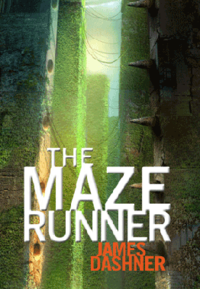
The Maze Runner
So I've been reading this book called The Maze Runner by James Dashner, and I have to find pictures that illustrate themes in the book. The pictures I've chosen are as follows...




Subscribe to:
Comments (Atom)