Upon further examination your son Holden seems to show symptoms of a personality disorder. In order to be diagnosed with a personality disorder, a patient must demonstrate five or more of a number of different criteria. Holden meets exactly five to some extent, suggesting he has a borderline personality disorder. He has volotile relationships with other people, engages in impulsive and self-destructing actities such as smoking and drinking, and regularly experiences feelings of emptiness. He displays intense anger at inappropriate times and is terrified of being abandoned, going to extreme lengths to prevent it.
I advise giving therapy a try. Make sure to choose a therapist Holden can be comfortable with if possible- someone he doesn't consider a "phony." Minimal medication is advised as people with this kind of disorder often don't take well to it. Above all, don't try to force him into anything. He is sure to resist if you do.
Thursday, May 9, 2013

Friday, May 3, 2013
Impressionist Art
Today, my class has to select our favorite abstract expressionist and talk about them. I can't pretend to like or understand that kind of art, but one guy I thought was pretty good was Wassily Kandinsky. Here are some of his paintings:


Kandinsky was a big believer in what he called inner necessity- the true hidden beauty of everyday life. This influenced a lot of his earlier paintings. He was also an expert in music and philosophy and frequently compared the two to art. Though he was very smart and school came easy to him, he was known for having a very hard time relaxing, and he felt overwhelmed by the world, channeling these feelings into his paintings. That feeling of being overwhelmed was the primary emotion he put into his art as he shows in the seemingly random jumbles of shapes and objects in some of his paintings. He also frequently used The Bible for inspiration, particularly Revalation, as many of his paintings dealt with the end of the world.
Some of his paintings give a positive "Oh, that's nice" reaction like the one of the street and the horse one. Others are violent and random-seeming and give a more negative feel. Abstract expressionalism was fueled by a desire for change and to establish American art. Those may not have been what motivated Wassily, but it's what his work inspired for many other artists nontheless.


,_oil_on_cardboard,_later_mounted_on_wood_panel,_48_x_69.5_cm,_The_Merzbacher_collection,_Switzerland.jpg)

_oil_on_canvas,_94_x_130_cm,_Museum_Boijmans_Van_Beuningen,_Rotterdam,_Netherlands.jpg)

Kandinsky was a big believer in what he called inner necessity- the true hidden beauty of everyday life. This influenced a lot of his earlier paintings. He was also an expert in music and philosophy and frequently compared the two to art. Though he was very smart and school came easy to him, he was known for having a very hard time relaxing, and he felt overwhelmed by the world, channeling these feelings into his paintings. That feeling of being overwhelmed was the primary emotion he put into his art as he shows in the seemingly random jumbles of shapes and objects in some of his paintings. He also frequently used The Bible for inspiration, particularly Revalation, as many of his paintings dealt with the end of the world.
Some of his paintings give a positive "Oh, that's nice" reaction like the one of the street and the horse one. Others are violent and random-seeming and give a more negative feel. Abstract expressionalism was fueled by a desire for change and to establish American art. Those may not have been what motivated Wassily, but it's what his work inspired for many other artists nontheless.
Thursday, April 18, 2013
Understanding Poetry
Some people find poetry easy to understand while others think it is impossible. I tend to fall somewhere between those two categories, though unfortunately probably more toward the second one. Here's some poetry that I think is too easy, too hard and just right for my current comprehension level.
Too easy: "Every Day" by Rich Acetta-Adams
Not a bad poem, but there isn't much to misinterpret here. It is just talking about the daily routine of the author's family. No hidden messages as far as I'm aware- though if I'm wrong, I bet I look like an idiot for putting it up here as the "easy" poem.
Too hard: "Elegy in a Spider's Web" by Laura Jackson
This poem is insane. It makes no sense whatsoever. The title sheds a pinprick of light on what it means, but I can't make any kind of sense of it. You really have to read the poem to see what I mean here; look it up.
Just right: "The Road Not Taken" By Robert Frost
Okay, I'll admit it, I don't fully understand all the possible meanings of this poem. But that's what I like about it; it seems simple to interpret, yet there's always a deeper meaning. It seems to be a happy poem at first, but there's an element of wistfulness to it, as if he knows he will never get a chance to take the other road. I'm not a poetry person, but this one is actually really good. Here's a link: http://www.poemhunter.com/poem/the-road-not-taken/
Too easy: "Every Day" by Rich Acetta-Adams
Not a bad poem, but there isn't much to misinterpret here. It is just talking about the daily routine of the author's family. No hidden messages as far as I'm aware- though if I'm wrong, I bet I look like an idiot for putting it up here as the "easy" poem.
Too hard: "Elegy in a Spider's Web" by Laura Jackson
This poem is insane. It makes no sense whatsoever. The title sheds a pinprick of light on what it means, but I can't make any kind of sense of it. You really have to read the poem to see what I mean here; look it up.
Just right: "The Road Not Taken" By Robert Frost
Okay, I'll admit it, I don't fully understand all the possible meanings of this poem. But that's what I like about it; it seems simple to interpret, yet there's always a deeper meaning. It seems to be a happy poem at first, but there's an element of wistfulness to it, as if he knows he will never get a chance to take the other road. I'm not a poetry person, but this one is actually really good. Here's a link: http://www.poemhunter.com/poem/the-road-not-taken/
Thursday, April 11, 2013
No Fear Shakespeare
My English class is reading Shakespeare's Romeo and Juliet this quarter. I know a lot of people in modern times have trouble understanding Shakespeare's works, so I'm posting some links for anyone who needs help.
http://www.nosweatshakespeare.com/
This handy site has plenty of information about both Shakespeare himself and all his works. If you're having trouble understanding anything, this is as good a place as any to start.
http://shakespeare.about.com/od/teachingshakespeare/a/shakespeare_words.htm
It has nowhere near the amount of total info of the above site, but it's a nice list of all the Shakespeare terms and what they mean.
http://www.shakespearehigh.com/classroom/guide/page1.shtml
As the name suggests, this site is practically an online classroom for learning about Shakespeare that should be a lot of help.
http://www.shakespeare-online.com/plays/howtostudybard.html
A guide devoted specifically to help students be able to better understand how to deal with Shakespeare in general.
http://www.enotes.com/romeo-and-juliet-text/strategies-for-understanding
Here's one focusing on Romeo and Juliet specifically.
http://www.nosweatshakespeare.com/
This handy site has plenty of information about both Shakespeare himself and all his works. If you're having trouble understanding anything, this is as good a place as any to start.
http://shakespeare.about.com/od/teachingshakespeare/a/shakespeare_words.htm
It has nowhere near the amount of total info of the above site, but it's a nice list of all the Shakespeare terms and what they mean.
http://www.shakespearehigh.com/classroom/guide/page1.shtml
As the name suggests, this site is practically an online classroom for learning about Shakespeare that should be a lot of help.
http://www.shakespeare-online.com/plays/howtostudybard.html
A guide devoted specifically to help students be able to better understand how to deal with Shakespeare in general.
http://www.enotes.com/romeo-and-juliet-text/strategies-for-understanding
Here's one focusing on Romeo and Juliet specifically.
Thursday, March 21, 2013
My class has to read Shakespeare's Romeo and Juliet this quarter. I know a lot of people in today's world have trouble understanding Shakespeare's works (I know I do), so here's a few links to sites that can help these people out.
http://www.nosweatshakespeare.com
This handy site has tons of information about Shakespeare's plays as well as the man himself. If you're trying to learn about or understand anything Shakespeare-related, this is the first place you should go.
http://shakespeare.about.com/od/teachingshakespeare/a/shakespeare_words.htm
A list of all the hard-to-understand words and phrases in Shakespeare's works and what they mean exactly.
http://www.shakespearehigh.com/
Essentially an online classroom for learnign about Shakespeare, this site should be helpfull to any student.
http://www.shakespeare-online.com/plays/howtostudybard.html
Provides all kinds of information, strategies and tips to help you deal with any Shakespearian literature you come across.
http://www.enotes.com/romeo-and-juliet-text/strategies-for-understanding
This one is devoted specifically to Romeo and Juliet, but the tips it contains actually apply to any of his works.
"Nice description, Eric, I also liked Divergent.
Somehow, though, I was never really a fan of Tris; I just never thought she was a very interesting character for some reason."
http://www.nosweatshakespeare.com
This handy site has tons of information about Shakespeare's plays as well as the man himself. If you're trying to learn about or understand anything Shakespeare-related, this is the first place you should go.
http://shakespeare.about.com/od/teachingshakespeare/a/shakespeare_words.htm
A list of all the hard-to-understand words and phrases in Shakespeare's works and what they mean exactly.
http://www.shakespearehigh.com/
Essentially an online classroom for learnign about Shakespeare, this site should be helpfull to any student.
http://www.shakespeare-online.com/plays/howtostudybard.html
Provides all kinds of information, strategies and tips to help you deal with any Shakespearian literature you come across.
http://www.enotes.com/romeo-and-juliet-text/strategies-for-understanding
This one is devoted specifically to Romeo and Juliet, but the tips it contains actually apply to any of his works.
"Nice description, Eric, I also liked Divergent.
Somehow, though, I was never really a fan of Tris; I just never thought she was a very interesting character for some reason."
Thursday, February 7, 2013
Ender's Game
We had our picks of several dystopian books for English this year. Unfortunately, by the time I came to pick up a book only Ender's Game and The Host were left-one of which I've already read and one of which I don't want to read. I'd rather read Ender's game again than read The Host, so that's the one I picked. I'm actually pretty happy with this arrangement; I really liked Ender's Game the first time around. I don't really know how it made it onto a dystopian list, though- there is not much about it that is actually dystopic, at least nothing I can remember.
The only thing that I would consider to be dystopic in the book is the way the government lies to everyone about why battle school exists, and I'm not even supposed to know about that yet... I guess the population control law might count, though. The people certainly live in fear, but the living conditions are pretty good and the government is pretty much the same as it is now. Here's a picture of the book, and a link to buy it :http://www.amazon.com/Enders-Game-Ender-Book-1/dp/0812550706/ref=sr_1_1?ie=UTF8&qid=1360262693&sr=8-1&keywords=ender%27s+game

The only thing that I would consider to be dystopic in the book is the way the government lies to everyone about why battle school exists, and I'm not even supposed to know about that yet... I guess the population control law might count, though. The people certainly live in fear, but the living conditions are pretty good and the government is pretty much the same as it is now. Here's a picture of the book, and a link to buy it :http://www.amazon.com/Enders-Game-Ender-Book-1/dp/0812550706/ref=sr_1_1?ie=UTF8&qid=1360262693&sr=8-1&keywords=ender%27s+game

Thursday, January 31, 2013
Huckleberry Finn and the N-word debate
I recently read an article about the N-word in the book Huckleberry Finn talking about how the new, censored version-which is rapidly taking over on school reading lists. This new version replaces the the word "nigger" with the word "slave". It is hotly debated whether or not the original version should be read to kids or not. Some say kids should not be exposed to the word; others say the word is more hurtful if you don't use it.I am inclined to believe the latter group; I believe that profanity is more meaningful the less you use it.
Another issue with censoring the word is that it takes away from the meaning of the book. During the time period that the book was set in , it was the word everybody used. And it's not like it goes unsaid today, either- most black people call themselves and each other that. It also changes the meaning of the word itself- "slave" is a condition while "nigger" refers to the entire race.
Another issue with censoring the word is that it takes away from the meaning of the book. During the time period that the book was set in , it was the word everybody used. And it's not like it goes unsaid today, either- most black people call themselves and each other that. It also changes the meaning of the word itself- "slave" is a condition while "nigger" refers to the entire race.
Friday, January 25, 2013
Drive-Thru workers
There are many things that can annoy me, it's true,
but my biggest pet peeve is the workers at the drive-thru.
I might order a chicken sandwich and fries
but over the years I have come to realize
if I say "no mayonnaise" they'll give me plenty
and if it's three dollars they'll charge me a twenty.
They get everyone else's orders right with consistency
but mine they mess up with incredible frequency.
What is it about me that makes them mess up?
Makes them forgest the pickles and the ketchup?
It's not only the drive-thru but restaurants too;
I'll get pork instead of the cow that says moo.
If I ask for a lemon they'll give me a lime
ninety-nine point nine percent of the time.
My fries are all curly instead of straight
And the rest of the food sitting on my plate
is probably something that I don't really like
like saurkraut, brussel sprouts and English tripe.
But at the end of the day it doesn't bother me
'cause they make up for it by letting me eat free.
but my biggest pet peeve is the workers at the drive-thru.
I might order a chicken sandwich and fries
but over the years I have come to realize
if I say "no mayonnaise" they'll give me plenty
and if it's three dollars they'll charge me a twenty.
They get everyone else's orders right with consistency
but mine they mess up with incredible frequency.
What is it about me that makes them mess up?
Makes them forgest the pickles and the ketchup?
It's not only the drive-thru but restaurants too;
I'll get pork instead of the cow that says moo.
If I ask for a lemon they'll give me a lime
ninety-nine point nine percent of the time.
My fries are all curly instead of straight
And the rest of the food sitting on my plate
is probably something that I don't really like
like saurkraut, brussel sprouts and English tripe.
But at the end of the day it doesn't bother me
'cause they make up for it by letting me eat free.
Thursday, January 10, 2013
Satire in Shrek
For my first post of the new year, I'm going to talk about examples of satire in the movie Shrek. There are four types of satire: exaggeration, reversal, parody, and incongruity. There are many exaggerations in the movie, such as Lord Faarquad's height, Shrek's hygiene and Fiona's fighting abilities. The main character, Shrek, is an example of reversal satire, since he is an ogre, but he is the hero of the story instead of the villain. The fairy tale creatures are an incongruity since they are so out of place with the otherwise realistic world. However, the type of satire that was used the most was parody.
The entire movie was essentially a parody of fairy tales in general, particularly princess rescue stories like Sleeping Beauty. Numerous other individual stories were parodied as well, such as Snow White (Faarquad's mirror). Fairy tales aren't the only things parodied in the movie: many other things are poked fun at as well. The movie parodies pro wrestling in the tournement scene, king fu movies in the forest scene and celebrity marriages in the wedding scene. Throughout the entire movie, the goal of the satire was to make a movie that could appeal to a younger audience with exaggeration and slapstick as well as an older one with the movie's various parodies.
The entire movie was essentially a parody of fairy tales in general, particularly princess rescue stories like Sleeping Beauty. Numerous other individual stories were parodied as well, such as Snow White (Faarquad's mirror). Fairy tales aren't the only things parodied in the movie: many other things are poked fun at as well. The movie parodies pro wrestling in the tournement scene, king fu movies in the forest scene and celebrity marriages in the wedding scene. Throughout the entire movie, the goal of the satire was to make a movie that could appeal to a younger audience with exaggeration and slapstick as well as an older one with the movie's various parodies.
Tuesday, December 4, 2012
Interview with Bombur
The Fairy Gazette
Exclusive interview with the dwarf Bombur
by our very own Cornelius Milton III
C: So, Bombur, I hear you were part of the quest to kill Smaug.
B: That I was.
C: How did it make you feel, knowing that you were a part of something so important?
B: I don't know. I never really thought about it too much-I mostly just wanted some food.
C:In all your long travels, did you ever feel all hope was lost?
B: Absolutely. Every time we missed a meal I felt like the world would end. And the dragon was pretty scary too.
C: What were your feelings after you learned Thorin was dead?
B: I guess I felt kind of sad...But I never really liked him anyway.
C: How do you respond to the rumors that Balin cheated you out of some of your share of the treasure?
B: I can (expletive) well believe it. He always was a sneaky little (expletive).
C: In Bilbo's memoirs he never mentioned you were so foulmouthed.
B: Of course I'm foulmouthed: I'm a (expletive) dwarf. And you shouldn't believe everything Bilbo writes. That book of his makes him seem a lot more heroic than he really was. And I didn't get nearly the credit I deserved.
C: No offense, Bombur, but you don't seem to have a heroic-erm-build.
B: ARE YOU CALLING ME FAT?
C: No, no, I'm just saying...
B: I am SICK of people calling me fat. All the other dwarves always made me go last because I was too (expletive) fat.I am NOT taking this from people anymore!
C: Okay okay, calm down a bit now...
B: I will NOT calm down!I can be mad If I (expletive) well want to be! Now get out of here or I'll-I'll
C: Hey now, I just want to ask a few more questions.
B: AAARRRGGGHHH!!!
C: This concludes my (ow!) exclusive interview with (oof!) the dwarf Bombur (ouch!)
Wednesday, November 28, 2012
Fantastic Creatures
So far, reading The Hobbit, there have been a lot of fantastical creatures in the story. Pretty much all of them are variations of real-life things. Hobbits and dwarves are small humans while trolls and giants are huge ones. Elves are extra good versions of humans while Goblins are extra-evil ones.There are also much larger and more intelligent versions of spiders, eagles and wolves. This is pretty much similar to every other fantasy story. Take Eragon, for example (the most generic fantasy I could think of). It's got elves, dwarves, and altered animals. The personalities of the creatures are pretty much the same too. In both, the elves represent perfection, while the dwarves are grouchy and like underground places. The animals are always evil or at best (eagles) neutral.
Harry Potter is another really popular example, but there's a lot more straying from stereotypes in Harry Potter than in Eragon. The elves in particular are just bout the opposite of what they're usually portrayed as. And the goblins aren't inherently evil, though they certainly aren't good either, and they take the place of dwarves as the master smiths of the harry potter world. Other things are still the same, though- there are still giant spiders and stuff like that.
In general, though, fantastic creatures are pretty much the same whatever story you read. I can't think of any good closing statements right now, so I'll just stop writing and leave this post at an abrupt and awkward ending.
Harry Potter is another really popular example, but there's a lot more straying from stereotypes in Harry Potter than in Eragon. The elves in particular are just bout the opposite of what they're usually portrayed as. And the goblins aren't inherently evil, though they certainly aren't good either, and they take the place of dwarves as the master smiths of the harry potter world. Other things are still the same, though- there are still giant spiders and stuff like that.
In general, though, fantastic creatures are pretty much the same whatever story you read. I can't think of any good closing statements right now, so I'll just stop writing and leave this post at an abrupt and awkward ending.
Tuesday, November 20, 2012
Translation Issues
Fairy tales have been passed down through the generations for thousands of years, but apparently, the people who originally came up with the stories rarely wrote them down. This led to all kinds of versionjs of the story floating around with no one knowing what was the original version. Take the story of the death of King Arthur I wrote about in my last post. The original story details an entire war between Arthur and Mordred's forces, not just one fight, talking about how the queen escaped Mordred, how Mordred laid siege to the tower of london, and the multiple battles between the two sides. Arthur never fought Mordred; he was killed by some random soldier and died quickly- the whole magical lake part was cut out entirely. The whole thing was more gritty adn realistic, and it was written in a much older writing style. The theme and lessons are the same, but the lack of the whole magical part means many of the motifs found in the modern version aren't there in the older version. Reading the two back to back, it's almost like two different stories with similar outline and the same names for the characters.
Fairy Tales
A cool fairy tale I read recently was "The death of King Arthur. Your can see the URL to it here: http://www.pitt.edu/~dash/arthur.html#mordred.
In the story, King Arthur was out fighting in a war, and Mordred forged papers that made it seem like he died, Making him-Arthur's next of kin- the ruler of London. He married Arthur's wife Guenivere and took over his kingdom. Arthur and his troops came back to fight Mordred. Arthur killed Mordred, but Mordred gave Arthur a mortal wound. Arthur told a knight called Bedivere to throw his sword, Excalibur, in a lake. Bedivere pretended to twice, but Arthur could tell he was lying both times, so Bedivere finally threw it in. A hand came out of the water and cought the sword, and Arthur took this as a sign and went out on a raft and was never seen again.
I found plenty of literary motifs in the story. Magic objects (the sword),apparent death (the ending), trickery, betrayal and revenge (Mordred's betrayal and Arthur's retaliation), the returning soldier (Arthur) and the corruption of power (Mordred again).
In the story, King Arthur was out fighting in a war, and Mordred forged papers that made it seem like he died, Making him-Arthur's next of kin- the ruler of London. He married Arthur's wife Guenivere and took over his kingdom. Arthur and his troops came back to fight Mordred. Arthur killed Mordred, but Mordred gave Arthur a mortal wound. Arthur told a knight called Bedivere to throw his sword, Excalibur, in a lake. Bedivere pretended to twice, but Arthur could tell he was lying both times, so Bedivere finally threw it in. A hand came out of the water and cought the sword, and Arthur took this as a sign and went out on a raft and was never seen again.
I found plenty of literary motifs in the story. Magic objects (the sword),apparent death (the ending), trickery, betrayal and revenge (Mordred's betrayal and Arthur's retaliation), the returning soldier (Arthur) and the corruption of power (Mordred again).
Thursday, November 15, 2012
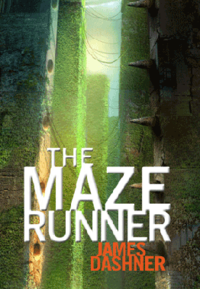
The Maze Runner
So I've been reading this book called The Maze Runner by James Dashner, and I have to find pictures that illustrate themes in the book. The pictures I've chosen are as follows...




Wednesday, October 17, 2012
Introduction
Hello. My name is Daniel (no further personal
information forthcoming, sorry). I enjoy sci-fi and fantasy books and movies
(nerdy I know) and listening to classic rock (The Beatles, Led Zeppelin, etc.).
I also love playing baseball, and basketball and football are pretty fun too. I
don't watch much TV honestly, but I do my fair share of internet surfing and
video game playing. I’m writing this blog for school and the first thing I have
to write about is how I feel about our upcoming book project: The Odyssey.
I have to admit, I’m a little curious about the
book. I’ve always been somewhat interested in Greek mythology, and I read a
little bit of the Iliad and actually kind of liked it. At the same time, I don’t
expect it to be all that exciting to the modern reader. I always hated reading Shakespeare
in middle school. So I’m divided over wanting to read it and being nervous
about it. I guess I’ll just have to wait and see.
Subscribe to:
Posts (Atom)