There are many things that can annoy me, it's true,
but my biggest pet peeve is the workers at the drive-thru.
I might order a chicken sandwich and fries
but over the years I have come to realize
if I say "no mayonnaise" they'll give me plenty
and if it's three dollars they'll charge me a twenty.
They get everyone else's orders right with consistency
but mine they mess up with incredible frequency.
What is it about me that makes them mess up?
Makes them forgest the pickles and the ketchup?
It's not only the drive-thru but restaurants too;
I'll get pork instead of the cow that says moo.
If I ask for a lemon they'll give me a lime
ninety-nine point nine percent of the time.
My fries are all curly instead of straight
And the rest of the food sitting on my plate
is probably something that I don't really like
like saurkraut, brussel sprouts and English tripe.
But at the end of the day it doesn't bother me
'cause they make up for it by letting me eat free.
Friday, January 25, 2013

Thursday, January 10, 2013
Satire in Shrek
For my first post of the new year, I'm going to talk about examples of satire in the movie Shrek. There are four types of satire: exaggeration, reversal, parody, and incongruity. There are many exaggerations in the movie, such as Lord Faarquad's height, Shrek's hygiene and Fiona's fighting abilities. The main character, Shrek, is an example of reversal satire, since he is an ogre, but he is the hero of the story instead of the villain. The fairy tale creatures are an incongruity since they are so out of place with the otherwise realistic world. However, the type of satire that was used the most was parody.
The entire movie was essentially a parody of fairy tales in general, particularly princess rescue stories like Sleeping Beauty. Numerous other individual stories were parodied as well, such as Snow White (Faarquad's mirror). Fairy tales aren't the only things parodied in the movie: many other things are poked fun at as well. The movie parodies pro wrestling in the tournement scene, king fu movies in the forest scene and celebrity marriages in the wedding scene. Throughout the entire movie, the goal of the satire was to make a movie that could appeal to a younger audience with exaggeration and slapstick as well as an older one with the movie's various parodies.
The entire movie was essentially a parody of fairy tales in general, particularly princess rescue stories like Sleeping Beauty. Numerous other individual stories were parodied as well, such as Snow White (Faarquad's mirror). Fairy tales aren't the only things parodied in the movie: many other things are poked fun at as well. The movie parodies pro wrestling in the tournement scene, king fu movies in the forest scene and celebrity marriages in the wedding scene. Throughout the entire movie, the goal of the satire was to make a movie that could appeal to a younger audience with exaggeration and slapstick as well as an older one with the movie's various parodies.
Tuesday, December 4, 2012
Interview with Bombur
The Fairy Gazette
Exclusive interview with the dwarf Bombur
by our very own Cornelius Milton III
C: So, Bombur, I hear you were part of the quest to kill Smaug.
B: That I was.
C: How did it make you feel, knowing that you were a part of something so important?
B: I don't know. I never really thought about it too much-I mostly just wanted some food.
C:In all your long travels, did you ever feel all hope was lost?
B: Absolutely. Every time we missed a meal I felt like the world would end. And the dragon was pretty scary too.
C: What were your feelings after you learned Thorin was dead?
B: I guess I felt kind of sad...But I never really liked him anyway.
C: How do you respond to the rumors that Balin cheated you out of some of your share of the treasure?
B: I can (expletive) well believe it. He always was a sneaky little (expletive).
C: In Bilbo's memoirs he never mentioned you were so foulmouthed.
B: Of course I'm foulmouthed: I'm a (expletive) dwarf. And you shouldn't believe everything Bilbo writes. That book of his makes him seem a lot more heroic than he really was. And I didn't get nearly the credit I deserved.
C: No offense, Bombur, but you don't seem to have a heroic-erm-build.
B: ARE YOU CALLING ME FAT?
C: No, no, I'm just saying...
B: I am SICK of people calling me fat. All the other dwarves always made me go last because I was too (expletive) fat.I am NOT taking this from people anymore!
C: Okay okay, calm down a bit now...
B: I will NOT calm down!I can be mad If I (expletive) well want to be! Now get out of here or I'll-I'll
C: Hey now, I just want to ask a few more questions.
B: AAARRRGGGHHH!!!
C: This concludes my (ow!) exclusive interview with (oof!) the dwarf Bombur (ouch!)
Wednesday, November 28, 2012
Fantastic Creatures
So far, reading The Hobbit, there have been a lot of fantastical creatures in the story. Pretty much all of them are variations of real-life things. Hobbits and dwarves are small humans while trolls and giants are huge ones. Elves are extra good versions of humans while Goblins are extra-evil ones.There are also much larger and more intelligent versions of spiders, eagles and wolves. This is pretty much similar to every other fantasy story. Take Eragon, for example (the most generic fantasy I could think of). It's got elves, dwarves, and altered animals. The personalities of the creatures are pretty much the same too. In both, the elves represent perfection, while the dwarves are grouchy and like underground places. The animals are always evil or at best (eagles) neutral.
Harry Potter is another really popular example, but there's a lot more straying from stereotypes in Harry Potter than in Eragon. The elves in particular are just bout the opposite of what they're usually portrayed as. And the goblins aren't inherently evil, though they certainly aren't good either, and they take the place of dwarves as the master smiths of the harry potter world. Other things are still the same, though- there are still giant spiders and stuff like that.
In general, though, fantastic creatures are pretty much the same whatever story you read. I can't think of any good closing statements right now, so I'll just stop writing and leave this post at an abrupt and awkward ending.
Harry Potter is another really popular example, but there's a lot more straying from stereotypes in Harry Potter than in Eragon. The elves in particular are just bout the opposite of what they're usually portrayed as. And the goblins aren't inherently evil, though they certainly aren't good either, and they take the place of dwarves as the master smiths of the harry potter world. Other things are still the same, though- there are still giant spiders and stuff like that.
In general, though, fantastic creatures are pretty much the same whatever story you read. I can't think of any good closing statements right now, so I'll just stop writing and leave this post at an abrupt and awkward ending.
Tuesday, November 20, 2012
Translation Issues
Fairy tales have been passed down through the generations for thousands of years, but apparently, the people who originally came up with the stories rarely wrote them down. This led to all kinds of versionjs of the story floating around with no one knowing what was the original version. Take the story of the death of King Arthur I wrote about in my last post. The original story details an entire war between Arthur and Mordred's forces, not just one fight, talking about how the queen escaped Mordred, how Mordred laid siege to the tower of london, and the multiple battles between the two sides. Arthur never fought Mordred; he was killed by some random soldier and died quickly- the whole magical lake part was cut out entirely. The whole thing was more gritty adn realistic, and it was written in a much older writing style. The theme and lessons are the same, but the lack of the whole magical part means many of the motifs found in the modern version aren't there in the older version. Reading the two back to back, it's almost like two different stories with similar outline and the same names for the characters.
Fairy Tales
A cool fairy tale I read recently was "The death of King Arthur. Your can see the URL to it here: http://www.pitt.edu/~dash/arthur.html#mordred.
In the story, King Arthur was out fighting in a war, and Mordred forged papers that made it seem like he died, Making him-Arthur's next of kin- the ruler of London. He married Arthur's wife Guenivere and took over his kingdom. Arthur and his troops came back to fight Mordred. Arthur killed Mordred, but Mordred gave Arthur a mortal wound. Arthur told a knight called Bedivere to throw his sword, Excalibur, in a lake. Bedivere pretended to twice, but Arthur could tell he was lying both times, so Bedivere finally threw it in. A hand came out of the water and cought the sword, and Arthur took this as a sign and went out on a raft and was never seen again.
I found plenty of literary motifs in the story. Magic objects (the sword),apparent death (the ending), trickery, betrayal and revenge (Mordred's betrayal and Arthur's retaliation), the returning soldier (Arthur) and the corruption of power (Mordred again).
In the story, King Arthur was out fighting in a war, and Mordred forged papers that made it seem like he died, Making him-Arthur's next of kin- the ruler of London. He married Arthur's wife Guenivere and took over his kingdom. Arthur and his troops came back to fight Mordred. Arthur killed Mordred, but Mordred gave Arthur a mortal wound. Arthur told a knight called Bedivere to throw his sword, Excalibur, in a lake. Bedivere pretended to twice, but Arthur could tell he was lying both times, so Bedivere finally threw it in. A hand came out of the water and cought the sword, and Arthur took this as a sign and went out on a raft and was never seen again.
I found plenty of literary motifs in the story. Magic objects (the sword),apparent death (the ending), trickery, betrayal and revenge (Mordred's betrayal and Arthur's retaliation), the returning soldier (Arthur) and the corruption of power (Mordred again).
Thursday, November 15, 2012
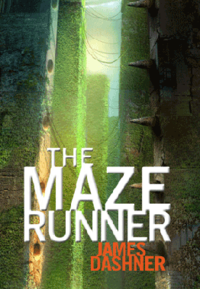
The Maze Runner
So I've been reading this book called The Maze Runner by James Dashner, and I have to find pictures that illustrate themes in the book. The pictures I've chosen are as follows...





Subscribe to:
Posts (Atom)